
2026 Open Enrollment Changes: What’s New, What’s Driving Cost, and What to Do Now
Major 2026 Open Enrollment updates: Premiums up, out-of-pocket limits higher, and subsidy extensions uncertain. Compare Marketplace vs Private PPOs before it’s too late.
Enrollment Help • Nov 5 • Written by Robert Adams
2026 Open Enrollment Changes: What’s New, What’s Driving Cost, and What to Do Now
Fast take:
The 2026 open enrollment is bringing significant shifts — premium hikes, higher out-of-pocket caps, and subsidy uncertainty all combine to change the game from previous years. If you’re qualifying for coverage for 2026, it’s time to compare [Marketplace](chatgpt://generic-entity?number=0) vs. private medically-underwritten PPOs vs. COBRA exit strategies and pick your right window **before the clock runs out**.
- • Premium filings show increases for 2026 in many states.
- • Max out-of-pocket limits are rising — you may pay more if you use care.
- • Subsidy changes are unconfirmed — if enhanced credits fade, your “net” cost could jump.
- • Not tied to federal subsidy legislation — pricing is independent.
- • Often broader PPO networks and fewer referral restrictions.
- • Eligibility required, but it’s a powerful option when Marketplace costs spike.
What’s new for 2026 open enrollment
The landscape has shifted in part due to macro-factors and in part due to policy. Here’s what’s driving the changes:
- Carrier cost-trend is higher → claims, drugs, and specialty care all escalate and carriers file accordingly.
- Higher out-of-pocket maximums → The yearly cap is creeping up again, meaning more financial risk for members.
- Subsidy uncertainty → If enhanced credits aren’t extended or phase down, even a stable income could leave you paying more.
- COBRA exposure remains extreme → If you’re losing employer coverage, staying on COBRA might cost more than shopping alternatives now.
What this means for you and your family
For example: a 45-year-old couple with two children saw a typical Bronze Marketplace renewal jump from $1,250 / mo in 2025 to around $1,650 / mo in 2026. The max out-of-pocket climbed from $8,700 to $10,000. That means:
- • You’ll pay a higher premium just to stay in the same segment.
- • If you or a family member use care early in the year, you’ll hit higher OOP sooner.
- • If subsidies are reduced, your net cost could rise again — even if your plan looked okay today.
That’s why we tell households: don’t renew blind. Compare Marketplace vs Private PPO vs COBRA alternative to see your real cost before you lock in.
What to do next: Your 3-step checklist
1) Submit your details
ZIP, ages, income estimate — so we can test all paths for you.
2) Verify your doctors & prescriptions
Network changes in 2026 are real. Let us check before you pick a plan.
3) Compare your three paths
Marketplace vs Private PPO vs COBRA exit — pick the one that fits your risk-level and timing.
Let’s lock the right 2026 plan for your ZIP.
We’ll run Marketplace vs Private PPO vs COBRA escape for your exact family, verify your doctors, and tell you which enrollment window you’re actually in.
Quick FAQs
Will I automatically see higher 2026-costs if I stayed in the same plan?
Often yes — even if your benefits didn’t change. Because premiums and OOP maximums are rising across the board.
What if enhanced subsidies get extended again?
Great if they are — but don’t bet on it. We prepare your plan assuming worst-case and then re-run if credits improve.
Can I switch mid-year if I pick wrong?
Maybe — but limited. That’s why we use a licensed advisor to match your timing, plan, and risk exposure before you enroll.
Robert Adams
RKA Insurance Advisors • Private & Marketplace Health Coverage • 561-806-9913 • robert@rkainsuranceadvisors.com

Lost Health Insurance?
Lost health insurance? Most people qualify for a Special Enrollment Period. Compare ACA vs. private PPO options, verify your doctors, and start coverage quickly with RKA
Enrollment Guides • Special Enrollment
Lost Health Insurance? What to Do Next
Fast take: Losing coverage is stressful—but you have options. Most people qualify for a Special Enrollment Period (SEP) to enroll in a new plan. We’ll help you compare ACA vs. private PPO options, verify your doctors, and start coverage quickly.
Step 1: Assess your situation
Confirm why and when your coverage ends (job change, hours reduction, divorce, aging off a parent’s plan, etc.). Your reason sets your eligibility window and documentation needs.
Step 2: Talk to a licensed advisor
Health insurance has moving parts—networks, Rx tiers, referrals, and deadlines. A licensed advisor helps you avoid gaps and costly mistakes while matching plans to your providers and budget.
Step 3: Check eligibility for a Special Enrollment Period (SEP)
- Common QLEs: loss of employer coverage, COBRA ending, move to a new ZIP/state, marriage/divorce, birth/adoption, income changes.
- Timing: Most SEPs last 60 days from the event. We’ll confirm your exact window and effective date rules.
ACA Marketplace Plans
- Guaranteed acceptance.
- Potential income-based subsidies to lower premiums.
- Networks and deductibles vary—verify your doctors and Rx.
Private Medically Underwritten PPOs
- Often lower premiums for healthy applicants.
- Frequent nationwide PPO access—good for travelers.
- Underwriting applies; we pre-screen and confirm networks first.
Step 4: Consider COBRA vs. switching
COBRA keeps your employer plan temporarily but you pay the full premium (plus admin fee). We’ll run ACA vs. PPO vs. COBRA side-by-side so you can see total annual cost with your expected usage.
Step 5: Budget for healthcare costs
- Monthly premium and employer/COBRA contribution (if any).
- Deductible, copays, coinsurance, and maximum out-of-pocket.
- Prescription costs and prior authorization requirements.
Step 6: Secure new coverage—without gaps
Once we’ve confirmed eligibility and networks, we’ll submit your application, confirm your effective date, and set up online account access and ID cards.
Quick FAQs
Will I have a gap between plans?
Can I switch off COBRA later?
Can you verify my doctors before I enroll?
For education only; eligibility, plan availability, and dates vary by state and carrier. Always review official plan documents.
Why Health Insurance Matters in 2026: Protection & Costs
Staying uninsured is risky. A single ER visit or surgery can create years of debt. The right health plan protects your health, your family, and your wallet by covering everyday care and unexpected emergencies.
Why Health Insurance Matters
Staying uninsured is risky. A single ER visit, surgery, or specialty medication can create years of debt. The right health plan protects your health, your family, and your wallet—before and after something serious happens.
Think of health insurance as a financial safety system: it keeps everyday care affordable, caps your worst-case bills in a bad year, and gives your family more stability when life changes unexpectedly.
Everyday care that stays affordable
- Helps with sick visits, labs, imaging, and prescriptions.
- Uses copays or in-network discounts instead of full price.
- Makes preventive care easier to keep up with.
Protection from “worst-case” bills
- Turns unpredictable hospital bills into capped costs.
- Uses deductibles and out-of-pocket maximums to limit damage.
- Helps you avoid long-term medical debt after an emergency.
Financial stability for your family
- Reduces the chance a surprise bill blows up your savings.
- Helps protect your credit and long-term goals.
- Gives you more control over how you budget for health care.
What tends to cost more—and why
Staying uninsured
- You pay full retail cost for ER visits, imaging, and surgery.
- Hospitals can bill tens of thousands of dollars for a single event.
- No out-of-pocket maximum to cap how bad a year can get.
Having the wrong-fit plan
- Too-high deductible or out-of-pocket max for your budget.
- Networks that don’t include your main doctors or hospitals.
- Drug coverage that doesn’t line up with your medications.
How to decide in minutes
Stay the course if…
- Your current plan is affordable and covers your doctors and meds.
- You’ve already met your deductible and have upcoming care.
- You understand your out-of-pocket max and it fits your savings.
Review options with RKA if…
- Your premiums jumped or you’re worried about 2026 increases.
- You’re not sure if ACA Marketplace or private PPO fits better.
- You want someone to verify doctors, hospitals, and medications for you.
Our role is to remove the guesswork. We map out what you actually use—doctors, prescriptions, budget—and then show how different plan types handle those needs.
Want a plan that actually fits your life?
We’ll verify your doctors and prescriptions, compare ACA Marketplace and private PPO options in your ZIP, and show clear costs—no pressure, just answers.
FAQ
Do I really need health insurance if I’m young and healthy?
Yes. Insurance is designed for the unexpected—accidents, new diagnoses, or sudden surgeries. When you’re healthy, you still benefit from low-cost preventive care and protection if something changes.
What’s the biggest risk of going without coverage?
One major event—such as an ER visit, imaging, or a short hospital stay—can create bills that take years to pay off. Without a plan, there’s no out-of-pocket maximum to cap how bad the year can get.
How do ACA Marketplace plans and private PPOs fit into this?
Marketplace plans use income-based credits and standardized benefits. Private PPOs can offer $0 deductibles, nationwide networks, and different pricing for healthy households. We compare both side-by-side so you’re not guessing.
What does it cost to work with RKA Insurance Advisors?
There is no extra cost to you. We’re paid by the carriers, so you get expert guidance and support with the same or better pricing than going direct—plus help during enrollment and if issues pop up later.
This overview is educational, not tax or legal advice. Availability and eligibility vary by state and carrier. Benefits, networks, and pricing are subject to change. Always review official plan documents before enrolling.

Truckers Health Insurance 2026: Owner-Operators & CDL Drivers Guide | RKA
Truckers need coverage that works in every state they drive. We compare ACA vs. private PPOs, verify doctors along your routes, model subsidies for variable income, and set up telehealth/Rx for life on the road.
Truckers Health Insurance 2026: Simple, Road-Ready Options
Fast take: Trucking life crosses state lines—your coverage should too. We compare ACA Marketplace options (often with subsidies) against private, medically underwritten PPOs for eligible drivers, then confirm your doctors, pharmacies, and hospitals along the routes you actually run.
Need coverage that works in every state you drive?
We'll estimate subsidies, check nationwide PPO access, verify your doctors, and show total annual cost—no pressure, just answers.
Get Free Quotes Book a CallYour main paths
1) ACA Marketplace (with possible subsidies)
Pro: Guaranteed issue, tax credits can lower premiums.
Watch: Networks can be local—confirm out-of-area rules for multi-state routes.
Best for: Drivers with variable income who likely qualify for credits.
2) Private, medically underwritten PPO
Pro: Broad nationwide PPO access; may beat unsubsidized ACA pricing for healthy drivers.
Watch: Health underwriting applies; we pre-screen quickly.
Best for: Owner-operators who want consistent nationwide networks and predictable costs.
Road-ready tips
Check your lanes
Tell us your common routes—TX-FL, I-10, I-80—so we verify in-network care along the way.
Telehealth first
Virtual visits cut downtime between loads; many plans include 24/7 telemedicine.
Rx strategy
Confirm formulary tiers and use nationwide pharmacy chains for easy refills.
HSA play
With an HSA-eligible plan, contributions may reduce taxes and cover on-the-road expenses.
OccAcc ≠ Health
Occupational accident is useful but does not replace major medical coverage.
How RKA helps truckers
Nationwide network checks
We confirm providers where you drive—not just near your home base.
Subsidy modeling
We map variable income by quarter to estimate credits accurately.
Fast enrollment
Avoid gaps between contracts; coordinate effective dates with dispatch schedules.
Ready for a side-by-side built for the road?
ACA vs PPO, doctors verified, Rx checked, total cost projected—so you can keep rolling.
Get Free Quotes Book a CallQuick FAQs for Truckers
Will my plan cover me in other states?
It depends on the plan. Some PPOs have national networks; many HMO/EPO plans limit out-of-area coverage. We'll confirm along your routes.
Can I switch outside Open Enrollment?
Private PPOs may be available year-round if you qualify. ACA plans require Open Enrollment or a qualifying life event.
Do telehealth visits count as in-network?
Usually yes with participating vendors—great for quick care between loads.
Can I use an HSA as an owner-operator?
Yes, with an HSA-eligible plan. Contributions may reduce taxable income; funds roll over year to year.
For education only; eligibility and benefits vary by carrier and state. Always review official plan documents.
Millions of people who rely on Medicaid could lose eligibility & be without coverage.
Millions of people who rely on Medicaid could lose eligibility & be without coverage.
Coverage Update
Millions Who Rely on Medicaid Could Lose Coverage — What to Do Next
Updated Oct 15 • Written by Robert Adams
Fast take: Millions of Americans are projected to lose Medicaid coverage as federal funding and eligibility provisions unwind. If this impacts you, act quickly—many qualify for a Special Enrollment Period to transition into new coverage and avoid a lapse.
Need Help Choosing the Best Plan in Your ZIP?
We’ll verify your doctors and meds, compare Marketplace vs. Private PPO options, and show clear side-by-side costs—no pressure, just answers.
Get Free Quotes Book a CallWhat’s Happening
During the pandemic, Medicaid programs expanded eligibility and paused re-verification to keep people covered. Those emergency measures are now ending. States are re-checking eligibility, and many Americans are finding their Medicaid coverage is being terminated—even if their income hasn’t changed drastically.
At RKA Insurance Advisors, we understand the confusion this creates. We help individuals and families review options fast to avoid any coverage gaps—whether through the Marketplace or an underwritten private PPO plan that offers nationwide access and flexibility.
What You Can Do Right Now
Once you lose Medicaid, you trigger a 60-day Special Enrollment Period (SEP). This is your limited window to enroll in a new plan and keep continuous coverage.
- Marketplace (ACA) Plans: You may qualify for premium tax credits or cost-sharing reductions based on income.
- Private PPO Plans: Medically underwritten plans may provide broader networks and lower deductibles for qualified applicants.
- COBRA: If you recently left an employer plan, COBRA continuation may still be available as a bridge option.
When Coverage Starts
- Enroll by the 15th: Coverage typically starts the 1st of the next month.
- Enroll after the 15th: Coverage usually starts the 1st of the following month.
- Bring Documentation: Keep your Medicaid termination letter—it’s required proof for a Marketplace SEP.
How to Protect Your Wallet
- Start your SEP immediately. Waiting even a few weeks can delay your effective date and leave you uninsured.
- Compare your total annual cost. Don’t just look at the premium—factor in deductibles, copays, and max out-of-pocket.
- Check providers and prescriptions first. Confirm your doctors and medications are in-network before you switch.
- Consider PPO flexibility. If you travel or need out-of-state care, Private PPOs often provide better nationwide access.
Not Sure Which Option Fits Your Family?
We’ll compare ACA vs. Private PPOs with your doctors and medications in mind and show clear, side-by-side costs—so you can decide confidently.
Get Free Quotes Book a CallQuick FAQs
Will I be uninsured right away if I lose Medicaid?
No. If you act quickly, you can transition directly into Marketplace or Private PPO coverage without a lapse.
Can I get premium help?
Yes. Marketplace plans often include tax credits that lower your monthly premium based on income.
What documents do I need?
Keep your Medicaid termination or eligibility notice. It’s required to confirm your Special Enrollment eligibility.
Can I switch plans later?
After your SEP ends, you typically need to wait for Open Enrollment or another qualifying life event to change coverage.
Robert Adams • President & Licensed Agent • NPN 19540130
Licensed in AL, CO, DE, FL, GA, IA, IL, IN, KY, KS, LA, MD, MI, MO, MS, MT, NC, NE, NV, OH, OK, SC, SD, TN, TX, UT, VA, WI, WV, WY
For education only; availability and benefits vary by carrier and state.

Time is Running Out: The Open Enrollment Deadline for Health Insurance Quotes is December 15th!
Open Enrollment 2026: Enroll by Dec 15 for Jan 1 or by Jan 15 for Feb 1. We’ll compare Marketplace vs Private PPO and verify your doctors first.
Open Enrollment • 2026 Deadlines • Written by Robert Adams
Open Enrollment 2026: Last Day for Jan 1 Coverage Is Dec 15 — Don’t Miss It
The 2026 window runs Nov 1 → Jan 15. Enroll by Dec 15 for a Jan 1 start, or by Jan 15 for a Feb 1 start. Prices are up in many ZIPs, so compare Marketplace vs. Private PPO (if eligible) before you lock in the wrong plan.
Key 2026 dates
- Nov 1: Open Enrollment starts.
- Dec 15: Deadline for Jan 1 coverage.
- Jan 15: Final day to enroll for a Feb 1 start.
Am I eligible for savings?
Most households qualify for some level of credit on Marketplace plans based on income, household size, and ZIP. We’ll run the numbers and show your net premium—then compare against a private, medically underwritten PPO if you’re eligible (often lower premiums for healthy applicants).
- • Can be cheapest if you qualify for credits.
- • Many plans are HMO/EPO; referrals are common.
- • Credits reconcile at tax time.
- • County/ZiP options vary, networks differ.
- • Often no referrals; broader networks.
- • Pricing isn’t tied to ACA credits.
- • Great fit when keeping doctors/hospitals matters most.
What to do right now (5 minutes)
1) Send basics
ZIP, ages, household/income range.
2) List doctors & meds
We verify networks + prescriptions.
3) Compare 3 paths
Marketplace • Private PPO • COBRA exit if needed.
Beat the Dec 15 cutoff for Jan 1 start.
We’ll show your net premium with credits, verify your doctors, and stack it against a Private PPO if you’re eligible.
Quick FAQs
What happens if I miss Dec 15?
You can still enroll by Jan 15 for a Feb 1 start. After that, you’ll need a Qualifying Life Event—or see if a Private PPO is available.
Will my doctors be in network?
We verify your providers and prescriptions for both paths before you enroll.
Are Private PPOs cheaper?
For healthy households that qualify, they can be competitive vs. unsubsidized Marketplace plans. We’ll show both.
Robert Adams
RKA Insurance Advisors • 561-806-9913 • robert@rkainsuranceadvisors.com
IMPORTANT OPEN-ENROLLMENT INFO AND DEADLINES
Open Enrollment only comes once a year—and missing a deadline can lock you into the wrong plan or higher premiums for all of 2026. Here’s a clear breakdown of the dates, what changes, and how we compare Marketplace vs private PPO options with your doctors and meds.
Enrollment Help • Open Enrollment 2026
Written by Robert Adams
Important Open Enrollment Info & Deadlines
Open Enrollment is your once-a-year chance to update, compare, or switch your health insurance. Deadlines, changes in income, or network shifts can impact your premium and benefits. Here is what you need to know to avoid unexpected costs or gaps in coverage.
Key Deadlines for Open Enrollment 2026
Open Enrollment Start
- Starts November 1st
- Best time to compare plans before rates increase
First Major Deadline
- December 15th
- Last day for January 1st start
Final Open Enrollment Deadline
- January 15th
- Last chance to change or enroll until 2027 (unless SEP applies)
Why These Dates Matter
- Plans and premiums change every year.
- Your income may push you into a new tax-credit bracket.
- Networks, deductibles, and prescriptions may shift.
- If you do nothing, you may auto-renew into a more expensive or worse plan.
Marketplace vs Private PPO: What to Review
Marketplace Changes (ACA)
- New premiums updated yearly
- Tax-credit amounts may shift
- Many plans are HMO/EPO only
- Doctor networks change frequently
Private PPO Updates
- Nationwide PPO access
- No referrals required
- Premiums based on age, ZIP, and network
- Great for frequent travelers or specialists
Want the best plan for your ZIP?
We’ll verify your doctors, prescriptions, and compare Marketplace vs Private PPO options.
Get Free Quotes Book a CallFAQ
Do I have to update my income each year?
Yes. Incorrect income can cause large tax-credit paybacks at tax time.
Can I change plans after December 15th?
Yes — you have until January 15th. But changes after 12/15 start February 1st.
Can you confirm my doctors?
Absolutely. We verify every doctor, hospital, specialist, and medication before you enroll.
OPEN ENROLLMENT IS HERE
Open Enrollment is open. 2026 premiums, networks, and deductibles are changing again. Here’s what to check now to avoid paying more or losing your doctors.
ENROLLMENT HELP • OPEN ENROLLMENT 2026
Written by Robert Adams
Open Enrollment Is Here: How to Avoid a Bad 2026 Plan
Open Enrollment is the short window each year when you can reset your coverage for the next calendar year. For 2026, premiums, deductibles, and networks are all shifting again. If you simply let your plan auto-renew, you could end up paying more, losing doctors, or getting stuck with the wrong deductible. Here’s what to do while Open Enrollment is open.
Key Dates While Open Enrollment Is Active
Open Enrollment Window
- Normally runs November 1st through mid-January
- Best time to compare plans before 2026 rates fully kick in
Priority Deadline
- Mid-December cutoff for a January 1st start
- Miss this and your new plan may not start until February
Final Change Deadline
- Last day of Open Enrollment is usually mid-January
- After this, changes typically require a qualifying life event (SEP)
Why You Shouldn’t Just Auto-Renew
- Your 2025 plan can come back in 2026 with new premiums and out-of-pocket costs.
- Doctor and hospital networks can quietly change—your provider may no longer be in-network.
- Prescriptions may move to a different tier or require new prior authorizations.
- If you don’t actively review options, you could pay more for less coverage all year long.
Marketplace vs Private PPO: What to Check Right Now
If You’re on the ACA Marketplace
- Re-run your income and household size—tax credits can change year to year.
- Confirm your doctors and main hospitals are still in-network.
- Review deductibles, copays, and out-of-pocket maximums for 2026.
- Watch for HMO/EPO restrictions and referral rules.
If You Qualify for Private PPO Options
- Check nationwide PPO access if you travel or live in more than one state.
- Confirm no referral requirements for specialists when eligible.
- Compare total cost: premium + expected usage, not just the monthly price.
- Good fit for self-employed, 1099, and families who want provider flexibility.
Want the right 2026 plan for your ZIP?
During Open Enrollment, we’ll verify your doctors and prescriptions, compare Marketplace and Private PPO options, and lay out the numbers in plain English before you decide.
FAQ
Do I have to re-apply every Open Enrollment?
What if I miss the mid-December deadline?
Can you help me compare Marketplace vs Private PPO?
Open Enrollment 2026 • health insurance deadlines • ACA Marketplace plans • Private PPO plans • health insurance quotes • RKA Insurance Advisors • self-employed health coverage
Robert Adams
https://www.RKAInsuranceAdvisors.com
Can you afford to NOT have health coverage?
oing without health insurance may feel like a way to save money, but one ER visit or unexpected diagnosis can cost thousands. Here’s what skipping coverage really risks—and how to protect yourself without overpaying.
HEALTH INSURANCE BASICS
Feb • Written by Robert Adams
Can You Afford to Not Have Health Coverage?
Skipping health insurance can feel like a way to “save money” when budgets are tight. But one bad accident, ER visit, or unexpected diagnosis can wipe out years of savings in a single night.
Here is what going without coverage really costs – and how to protect your family, your wallet, and your peace of mind without overpaying.
Why Going Without Coverage Is So Risky
Most people who go uninsured don’t plan to stay that way forever. It usually happens because income changes, jobs shift, or premiums look high on paper. The problem is that medical bills don’t wait until you’re “ready” – and providers charge full retail prices when there is no plan in place.
Emergency room visit
A single ER trip can run $3,000–$6,000 or more without insurance. Imaging, tests, and specialist fees stack up quickly.
Hospital stay or surgery
Overnight hospital stays commonly reach $20,000–$50,000+. Major surgery can easily cross six figures without a plan.
Medications & follow-up care
Brand-name medications, specialist visits, and imaging after an event can add hundreds to thousands more every month.
Why People Go Uninsured – And the Real Trade-Offs
If you’ve ever asked yourself, “Do I really need health insurance right now?” you’re not alone. These are the most common reasons people delay coverage – and what each one can cost.
“I’m healthy. I rarely see a doctor.”
Health can change overnight. A broken bone, car accident, or sudden diagnosis doesn’t wait until you’ve “used” enough benefits to justify the premium.
“Premiums feel expensive.”
The real comparison isn’t premium vs. $0. It’s premium vs. a potential $10,000–$50,000+ bill you’re responsible for on your own.
“I’ll sign up later if something happens.”
Enrollment windows and pre-treatment rules matter. In many cases you can’t wait until after an accident or diagnosis to buy coverage.
How to Get Covered Without Overpaying
The goal isn’t to buy the most expensive plan on the market. It’s to find the right mix of premium, network, and out-of-pocket protection for your situation.
ACA Marketplace options
- Income-based subsidies may reduce premiums dramatically.
- Good fit if you qualify for strong tax credits.
- Networks and deductibles vary widely by county and carrier.
Private PPO plans
- Often include broad nationwide networks.
- Can offer $0 deductibles and stronger out-of-pocket protection.
- Best fit for self-employed families, frequent travelers, or those who want to keep specific doctors.
At RKA Insurance Advisors, we compare ACA plans and private PPO options side by side. We verify your doctors and medications first, then show clear costs so you understand exactly what you’re paying for – and what protection you get in return.
Ready to see what going uninsured is really costing you?
We’ll compare ACA vs. private PPO options in your ZIP, verify your doctors, and show clear numbers before you decide.
Quick FAQs
Do I really need insurance if I’m healthy?
Yes. Health insurance is designed for the unexpected – accidents, new diagnoses, or sudden surgeries. When you’re healthy, you benefit from low-cost preventive care and protection if something changes.
Can you confirm my doctors are in-network?
Absolutely. Before you enroll, we’ll verify your preferred doctors, hospitals, and key medications so you’re not surprised after your plan starts.
What does it cost to work with RKA Insurance Advisors?
There is no extra cost to you. We’re paid by the carriers, so you get expert guidance and support with the same – or better – pricing than going direct.
health insurance quotes • going without health insurance • medical debt risk • ACA Marketplace • private PPO plans • RKA Insurance Advisors
Robert Adams
https://www.RKAInsuranceAdvisors.com

Telemedicine Benefits: Save Time, Cut Costs, and Skip the Waiting Room | RKA Insurance Advisors
See a clinician by phone or video—often at $0 copay. When telemedicine works best, what’s covered, and how to get plans with $0 virtual visits.
Health Guides • Updated • Written by Robert Adams
Telemedicine Benefits: Faster Care, Lower Cost, Less Hassle
Fast take:
Telemedicine lets you meet with board-certified clinicians by phone or video, usually in minutes. It’s great for common issues, refills, and follow-ups—often at $0 copay on many plans. You save time, avoid waiting rooms, and cut costs without sacrificing quality.
- • See a clinician from home, work, or travel—no waiting room.
- • Perfect for minor illnesses, refills, and quick follow-ups.
- • Visits typically run ~15 minutes.
- • Fewer germ exposures vs. urgent care/ER waiting areas.
- • Helpful for immunocompromised, pregnant, and elderly.
- • Triage contagious symptoms before in-person care.
- • Family, internal, and pediatrics: easy follow-ups and check-ins.
- • Manage hypertension, diabetes, asthma, mental health, more.
- • Many platforms offer 24/7 access.
- • Many plans cover telehealth at $0 or low copay.
- • Cash-pay telehealth is typically cheaper than in-office rates.
- • Using telehealth for non-emergencies avoids costly ER bills.
Good uses vs. go in-person
Use telemedicine for
- Cold/flu, sore throat, sinus/ear issues
- Minor skin rashes, pink eye
- Medication refills & follow-ups
- Mild GI upset
Go in-person for
- Chest pain, severe shortness of breath
- Serious injury, heavy bleeding
- Neurologic symptoms (stroke signs)
- Anything emergent → ER
Want $0-copay telehealth on your plan?
We’ll verify your network, show real costs, and compare Marketplace vs. Private PPO options for your ZIP.
Quick FAQs
Is telemedicine covered?
Many plans cover telehealth at 100% for non-emergency visits. We’ll confirm your exact copay and vendors.
Can telehealth prescribe meds?
Yes—for appropriate conditions. Controlled substances typically require in-person evaluation per state rules.
Does telehealth replace my PCP?
No. It complements primary care and urgent care for quick, non-emergency needs.
Robert Adams
RKA Insurance Advisors • Private & Marketplace Health Coverage • 561-806-9913 • robert@rkainsuranceadvisors.com

Health Insurance “Hacks”
Real, easy health insurance “hacks” that actually save time and money — use telehealth, urgent care, stay in-network, and compare Marketplace vs. Private PPO options.
Health Insurance Guides • Updated Nov 5 • Written by Robert Adams
Health Insurance “Hacks” — Real Tips That Actually Save Time & Money
Fast take:
Skip the gimmicks. Use telehealth for routine issues, choose the right site of care (Urgent Care vs ER), stay in-network to avoid surprise bills, and—if you’re generally healthy—ask about private, medically underwritten PPO options that can drop premiums. When in doubt, have us review your plan and show a side-by-side comparison.
- • Most plans include telehealth/telemedicine with low or $0 copay for common ailments.
- • Typical visit: ~15 minutes by video/phone—no waiting room.
- • Great for colds, rashes, UTI screens, refills, minor issues.
- • Non-emergencies → Primary Care or Urgent Care (faster, lower copays).
- • True emergencies → ER. Otherwise, ER = big bill + deductibles.
- • Ask your plan for preferred Urgent Care centers near you.
- • HMO/EPO: out-of-network = not covered (except emergencies).
- • PPO: out-of-network allowed, but you’ll pay more.
- • Call us—our team will verify your providers are in-network.
- • Medically underwritten PPOs can offer lower premiums for healthy applicants.
- • Often no referrals; broader access for specialists/hospitals.
- • Not for everyone—get a side-by-side with Marketplace plans.
Quick decision guide
Choose Telehealth if…
It’s routine/minor, you want fast care, and your plan shows $0–low copay visits.
Choose Urgent Care if…
It’s same-day non-emergency (stitches, x-rays, infections) and you want to avoid ER costs.
Call us if…
You’re unsure about networks, copays, deductibles, or whether a private PPO could save money.
Want us to check your “hacks” against your actual plan?
We’ll verify your doctors, map Urgent Care options, and compare Marketplace vs. Private PPO side-by-side.
Quick FAQs
Is telehealth really covered?
Most modern plans include it; many charge $0–low copays. We’ll check your specific policy.
How do I confirm a doctor is in-network?
Send us the doctor’s name and location—we’ll verify against your plan’s current network file.
Who should consider private PPO?
Applicants in good health who want broader access and potentially lower premiums. Not everyone qualifies—we’ll show a clean comparison.
Robert Adams
RKA Insurance Advisors • Private & Marketplace Health Coverage • 561-806-9913 • robert@rkainsuranceadvisors.com
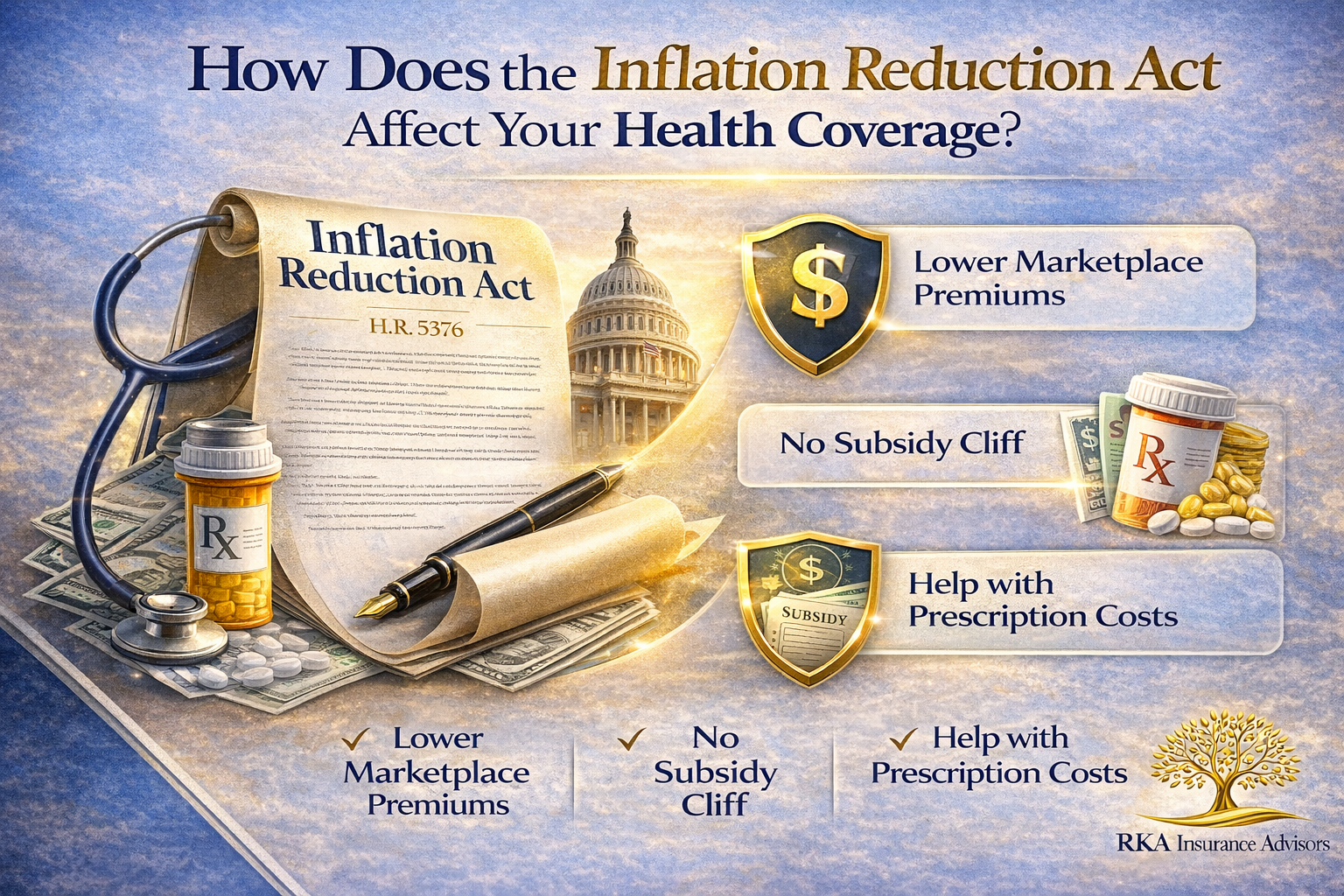
How does the Inflation Reduction Act affect your Health Coverage?
Inflation Reduction Act and Health Coverage
How the Inflation Reduction Act Affects Your Health Coverage
The Inflation Reduction Act (IRA) reshapes how Americans pay for health coverage. If you’re self-employed, between jobs, or comparing Marketplace plans with Private PPO options, these changes can directly affect your premiums, subsidies, and prescription costs. Here’s what it actually does and what to review before you renew.
What the Inflation Reduction Act Actually Does
Lower Marketplace Premiums
- Extends enhanced ACA subsidies that reduce monthly premiums for many households.
- More middle-income families qualify for assistance than before.
- Helps keep Marketplace plans competitive versus employer coverage.
No Sudden “Subsidy Cliff”
- Premium tax credits phase out gradually instead of cutting off at one income number.
- Savings scale with income, which helps freelancers and self-employed families.
- Gives more flexibility if your income fluctuates year to year.
Help With Prescription Costs
- Caps some out-of-pocket prescription costs in Medicare over time.
- Limits how fast certain drug prices can increase each year.
- Can ease pressure on overall family health budgets, especially for seniors.
Stronger Consumer Protections
- Makes it harder for plans tied to the ACA to shift large costs back onto families overnight.
- Encourages carriers to keep preventive and chronic-care benefits affordable.
- Supports more predictable pricing from year to year.
How It Affects Marketplace vs. Private PPO Plans
Marketplace (ACA) Plans
- Premiums are heavily influenced by IRA-extended subsidies and your household income.
- Great fits when tax credits keep monthly premiums low.
- Networks may be narrower (HMO/EPO), and referrals are common in many areas.
Private PPO (Non-Marketplace)
- Do not receive IRA subsidies—pricing is based on age, ZIP, benefits, and network size.
- Can offer nationwide PPO access with no referrals when medically underwritten.
- Often a better fit when keeping specific doctors, hospitals, or travel flexibility is the priority.
What To Do Before You Renew or Switch Plans
- Review income for next year. Estimate your 2026 household income as realistically as possible so subsidies are accurate.
- Compare Marketplace vs. Private PPO side by side. Look at doctors, prescriptions, deductibles, and total yearly cost—not just the premium.
- Check doctors and meds first. Confirm that your preferred providers and key prescriptions are covered under any new option.
- Avoid auto-renewing blindly. Plan designs and subsidies change; the plan that fit last year may not be the best fit now.
Want help sorting out IRA rules in your ZIP?
We’ll verify your doctors and prescriptions, compare Marketplace options with Private PPO plans, and show clear side-by-side costs—no pressure, just answers.
FAQ
Will the Inflation Reduction Act always keep my premiums low?
Not automatically. The IRA extends and adjusts subsidies, but your premium depends on income, age, ZIP code, and plan type. It’s important to review options each year.
Does the Inflation Reduction Act help with Private PPO plans?
No. IRA subsidies apply to ACA Marketplace coverage. Private PPO options are priced differently but can still be cost-effective when you need broader networks or no referrals.
Do I still need to report income changes?
Yes. If you use Marketplace coverage, you should update income and household changes so subsidies stay accurate and you avoid surprises at tax time.
Robert Adams
https://www.RKAInsuranceAdvisors.com
H.R.5376 - Inflation Reduction Act of 2022 was signed into law by Biden on 08/16/2022. Many argue whether this bill will help reduce inflation or not. That topic may be subjective to a degree, per each individual. We are here to discuss how this law directly affects your health coverage and the facts surrounding this bill's direct impact on Healthcare. Not to project our opinions or give a political spin.
Part 1-- Addresses prescription drug costs.
Lowering Prices Through Drug Price Negotiation. The bill requires the Centers for Medicare & Medicaid Services (CMS) to negotiate the prices of certain prescription drugs under Medicare beginning in 2026. Specifically, the CMS must negotiate maximum prices for brand-name drugs that do not have other generic equivalents and that account for the most significant Medicare spending. The CMS must negotiate the prices of 10 drugs in 2026, 15 in 2027 and 2028, 20 in 2029, and each year thereafter. Drug manufacturers that fail to comply with negotiation requirements are subject to civil penalties and excise taxes.
Part 2--Prescription Drug Inflation Rebates
In addition to negotiations, the bill requires drug manufacturers to issue rebates to the CMS for brand-name drugs without generic equivalents. Under Medicare, that costs $100 or more per year per individual, and for which prices increase faster than inflation. Manufacturers that fail to comply are subject to civil penalties. The bill provides funds through FY2031 for the CMS to implement the rebate programs.
Part 3--Part D Improvements and Maximum Out-of-Pocket Cap for Medicare Beneficiaries
The bill eliminates beneficiary cost-sharing above the annual out-of-pocket spending threshold under the Medicare prescription drug benefit beginning in 2024 and caps annual out-of-pocket spending at $2,000 in 2025 (with yearly adjustments thereafter). It also establishes a program under which drug manufacturers provide discounts to beneficiaries who have incurred costs above the annual deductible beginning in 2025. The bill provides funds through FY2031 for the CMS to implement these changes and requirements. The bill also establishes a process through which certain beneficiaries may have their monthly out-of-pocket costs capped and paid in monthly installments beginning in 2025. It provides funds for FY2023 for the CMS to implement this process.
Part 4--Continued Delay of Implementation of Prescription Drug Rebate Rule
The bill further delays until 2032 implementation of a Department of Health and Human Services rule relating to the treatment of certain Medicare prescription drug benefit rebates from drug manufacturers for federal anti-kickback laws.
Part 5--Miscellaneous
The bill establishes additional programs and requirements relating to coverage under the Medicare prescription drug benefit and other programs. For example, the bill eliminates cost-sharing under the Medicare prescription drug benefit for adult vaccines recommended by the Advisory Committee on Immunization Practices.
It also requires coverage, without cost-sharing, of such vaccines under Medicaid and the Children's Health Insurance Program (CHIP).
In addition, the bill caps cost-sharing under the Medicare prescription drug benefit for a month's supply of covered insulin products at (1) for 2023 through 2025 $35; and (2) beginning in 2026, $35, 25% of the government's negotiated price, or 25% of the plan's negotiated price, whichever is less. The bill provides funds for FY2022 for the CMS to implement these provisions.
Subtitle C--Affordable Care Act Subsidies
The bill extends 2025 certain adjustments and expansions of the premium tax credit, allowing taxpayers with income above 400% of the federal poverty line to qualify for the credit. Meaning the additional subsidies approved with the passage of the American Rescue plan were extended. Initially, there was an expectation that they would have expired.
Those are the facts of this bill that is now signed into law. We also know, and it's being reported, the expected price increase for 2023 marketplace plans. The analysis finds that the median proposed rate increase is 10% across 72 insurers in the markets reviewed. Insurers' rate requests are preliminary at this point. As a result, they may change during the review process before being finalized in early fall. Please be sure to reach out with any questions about this bill, rates, or general insurance. Our goal is to advise and educate.
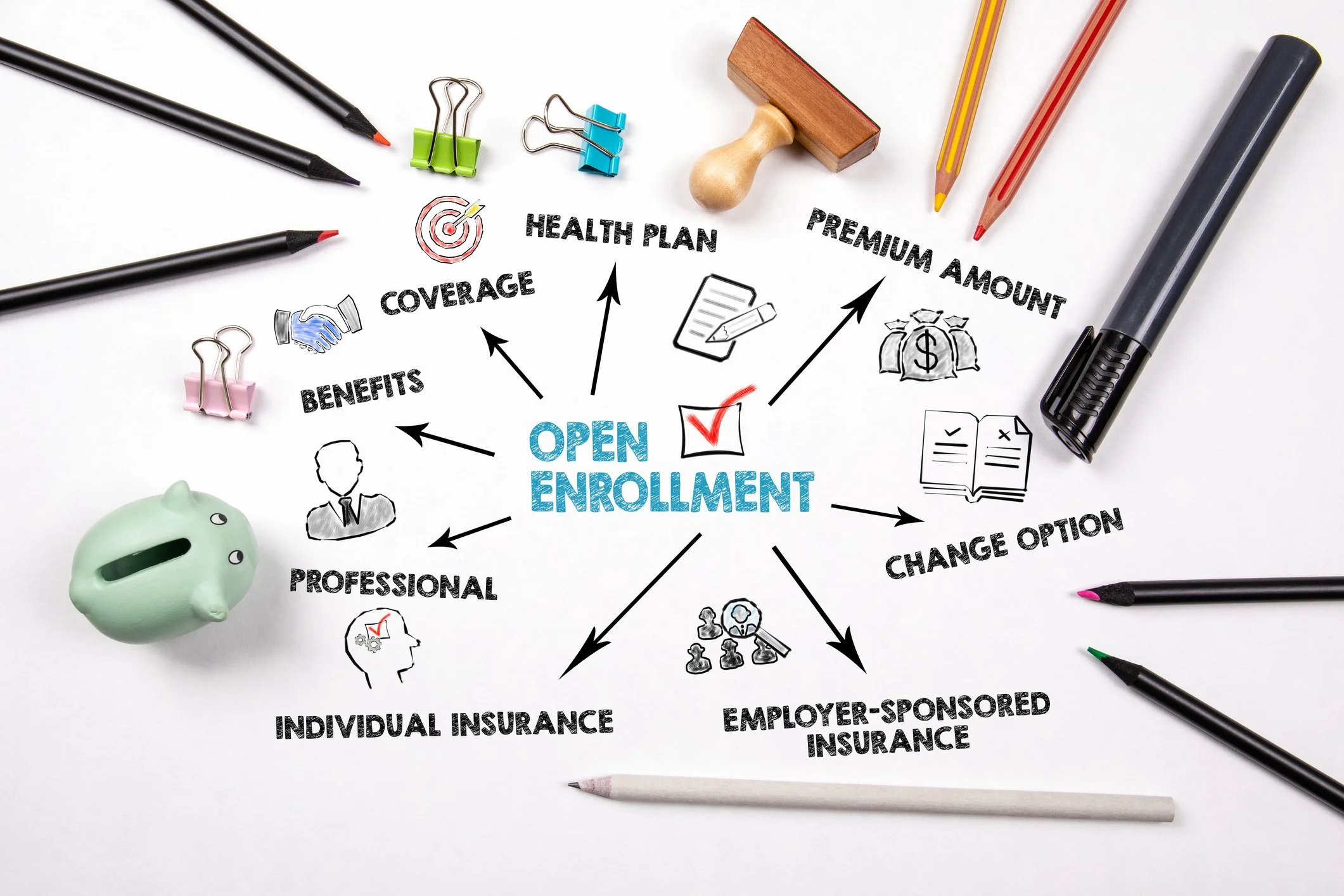
HOW TO PREPARE FOR OPEN ENROLLMENT AND WHAT TO EXPECT
HEALTH INSURANCE OPEN ENROLLMENT REMINDER
Open enrollment is the time of year when you can sign up for health insurance or change your current plan on the government marketplace. The open enrollment period for the marketplace is available from November 1, 2022– January 15, 2023. With coverage to begin January 1, 2023, so long you enroll before December 15, 2022. From December 16, 2022, to January 15, 2023, plans will start on February 1, 2023.
Before you dive in and start shopping around, it's essential to ensure you're prepared and educated for what lies ahead. So here are some tips on how to get ready:
Check if your income has changed from what you previously reported. Any underreporting income can result in a tax penalty when you file taxes.
Know what you are looking for, HMO, EPO, or PPO. High Deductible & Lower Premium? Or Low Deductible & Higher Premium?
Know what your max out-of-pocket will be in the event of a significant medical claim.
Understand the above insurance terms & what they mean.
Are your medical providers within your chosen plan's network?
Has there been a diagnosis of a pre-existing condition?
Did you move & are unsure if your current plan will cover you in your new area?
Know Your Options - Ensure you understand what coverage is available to you. You may want to consider buying coverage through the marketplace or getting a private plan outside of the marketplace.
Speaking to a Licensed Health Coverage Advisor is always the course of action. Our priority is to answer any questions you have and offer an educational approach to individual coverage in today's market.
What to Expect
Suppose you're currently enrolled in a plan through the marketplace. In that case, you can expect to receive information about open enrollment from your insurance company. You may also see open enrollment reminders on this website and social media.
This year there will be substantial changes to this open enrollment. Some of those changes are insurance carriers leaving specific markets and others adding plan options to others.
A few things have contributed to the above-average increases this year, such as inflation & Covid-19. Additional subsidies, also known as cost-sharing reduction, will continue into this year's Open Enrollment. Therefore, if you are receiving a subsidy, you may receive a notification about potential changes to premium costs.
It will be imperative in the event you do, you speak to a licensed health coverage advisor. By not doing so, you may be subjecting yourself to overpayments of premiums or potential penalties for income reporting.
Marketplace plans, although an excellent option to obtain coverage, due to ACA laws & protecting the rights of individuals to get coverage. The marketplace, however, is not the only place health coverage is available.
Finally—and most importantly—it's crucial that everyone speak to a licensed advisor when considering any change! We know how confusing these situations can be; that's why we're here for you at every step!
Be proactive and reach out to us today regarding any questions you may have or quotes you need. Let us assist you in determining which coverage provides you with the most protection at the most affordable rates.

What Is A PPO Health Insurance Plan?
What is a PPO Health Insurance Plan?
You may have heard the term PPO & HMO, maybe even nodded your head in conversation and acted as if you know precisely what a PPO is. You may know it's popular and realize it's better than an HMO. But when it comes to many of these different insurance terms, it leaves you scratching your head.
With all the different insurance terms, such as PPO, HMO, EPO, Deductibles, Max out of Pocket, Coinsurance, etc. Were going to focus on what is PPO Health Insurance in health insurance? The acronym PPO stands for Preferred Provider Organization and is one of the most popular types of coverage. PPO health insurance plans contract a network of medical providers, doctors, and facilities agreeing to charge a set rate for their services. By staying in-network, members will enjoy significant savings on all healthcare-related costs compared to seeking medical attention outside the network.
One of the most popular features of a PPO plan is its flexibility. While most health insurance plans, like HMOs, require you to select a Primary Care Physician, Preferred Provider Organizations don't. You also won't need a referral to see specialists. You even have the flexibility to go outside of the plan's network if need be.
How Preferred Provider Organizations Work
Now that you know what PPO means, let's take a closer look at this type of coverage. We briefly touched on how Preferred Provider Organizations use provider networks, but how does that save you money? Well, it boils down to this simple idea. Health insurance companies and medical providers are in the business of making money. While health insurance providers have an extensive list of members, medical providers have the skills and experience to look after the health and wellbeing of those members. They arrange a contract to provide care to the insurer's members for a predetermined contracted rate. By doing so, health insurance companies will save money by cutting costs, and medical providers will receive more business as preferred providers. The arrangement is typically a win-win situation for both parties and, most importantly, benefits you.
What's Covered?
Suppose you're purchasing a PPO insurance plan through the Marketplace. In that case, it will need to cover the minimum essential benefits mandated by the Affordable Care Act (Obamacare). On the other hand, suppose you opt to purchase health coverage outside the marketplace. In that case, your coverage will largely depend on your plan and who the insurance provider is. Although, most PPO plans provide extensive coverage as they have contracts with a large provider network at lower rates.
Flexibility
With PPOs, you don't need to choose a Primary Care Physician (PCP). Instead, you choose which doctors you want to see and how often you wish to see them. Here are three examples of why flexibility in seeking medical care can be helpful:
If you need to see a specialist, you can make an appointment without getting a referral from your primary doctor prior. Ideally, this saves you time and one less co-pay you have.
If you visit a doctor you don't like. You can make your next appointment with a different in-network doctor. No questions asked, and no waiting for approval from your insurance provider to switch doctors.
If you don't want to see a doctor for routine check-ups, you don't have to. You have the freedom to seek care whenever you want and from any doctor in your PPO network.
How Much Does A PPO Cost?
There are a few factors that determine the cost, such as age, how many people are insured, and zip code. Each plan also can differ in network size, copays, deductibles, and Max out of Pocket, which are all factored into rates. PPO plans on the marketplace are harder to come by. A large portion of country PPOs are not even available on the marketplace. If in the event they are, we generally see them much more expenses than HMO & EPO networks. Private PPO plans are available in most areas. These plans are short-term medical plans, which, although usually a PPO, provide limited benefits. Always speak to a Licensed Advisor before enrolling in any plan, especially short-term plans. Also, there are private plans that are subjected to a medical risk assessment, which typically results in more affordability bc the risk pool is healthier for individuals who have a smaller claims history. The insurance company can offer lower rates, PPO networks, and more benefits.
Where To Start Your Search
If you want to learn more about PPO health plans and whether or not it's your best coverage option, the best place to start is right here. RKA Insurance Advisors has helped thousands of individuals and families find the best policy by taking an educational approach and reviewing ALL the options available in your area. Getting started is as simple as going to our appointment page. Scheduling a time and day, you would have a few moments and speaking to one of our Licensed Advisors. We are here if it’s even to get a second opinion on your current plan. We look forward to hearing from you!
www.RKAinsuranceadvisors.com
561-806-9913
Robert@RKAinsuranceadvisors.com
Nationwide PPO Health Plans for Truckers
Not everyone knows how the trucking industry plays a vital role in our economy. CDL truck drivers are necessary for not only economic growth but the modern marketplace's ability to exist at all. Often these truckers are overworked and, in reality, not compensated enough for their role in the economy and our day-to-day lives. Without them, our lives do not function and are drastically impacted. Recently, we have seen surging prices for gas, food, and other goods. According to U.S. Bureau of Labor Statistics, this has catapulted U.S. inflation to a 40-year high in June, further pressuring all Americans, especially truckers.
As a result, truckers, in particular, have been one of the occupations hit the hardest. With record fuel prices and an occupation predicated on driving, this is not an ideal situation for truckers. In addition, many truckers are self-employed & contracted, further exacerbating the issue for them as they are responsible for all their costs.
Times like this are when you can start looking at areas to reduce cost—figuring out which areas we can cut to save some extra cash. One of the last areas truckers usually check is how much they are paying in health insurance costs. Once they have coverage, most people don't think to check to see if there are more affordable options. Or, at the very least, get a second opinion to ensure they have the best level of coverage at the most affordable rate and make sure the plan will cover you outside your resident state.
Truck drivers are among the most vulnerable workers in the U.S. labor force. They have one of the highest injury and illness rates for any occupation in America. Unfortunately, they are among the least likely to have health insurance coverage. According to HD Fleet, the average cost of a truck accident with one injured driver is $148,279. The cost can reach up to $7 million when it involves a fatality. Over-the-road and long-haul truck drivers are prone to accidents, leading to severe injuries. As a result, truck drivers end up in emergency rooms. Even using ERs for non-emergency services when it would have been much more cost-efficient for them with online telemedicine or urgent care treated by a Doctor or Nurse Practitioner. According to the U.S. Department of Transportation, long-haulers are more vulnerable to developing severe health conditions due to the nature of their job, making health insurance for truck drivers an essential need. These conditions are hypertension, insomnia, sleep apnea, spinal disorders, headaches and migraines, stress and depression, arthritis, sinus problems, and lung diseases.
The same research report highlights that prevalence of obesity in the average American worker is 31%. In addition, the prevalence of diabetes in truck drivers is 14% compared to 7% of the average American worker. The report shows that 17% of American workers don't have a health insurance plan. On the other hand, over-the-road and long-haul drivers are the most underprivileged regarding health insurance because 38% of drivers lack a proper coverage plan.
Due to the long-haul truck driver experiencing higher health risks, every truck driver needs health insurance. But unfortunately, most drivers don't have insurance to cover their health costs or their families' medical expenses.
This is why it's important for truck drivers, especially long-haul truckers, to secure Nationwide PPO coverage. Most options available on the marketplace exchange, otherwise known as ACA plans or Obamacare plans, are HMO or EPO networks, limiting your coverage area. These plans are terrific because they do accept everyone. Still, again you can be subjected to limited or smaller localized networks. Typically not allowing services to be covered outside of your resident state. That is not a good position to be on for an occupation requiring being out of the state more often than not. Also, being Self-Employed and not having a group health plan through a large employer.
PPO Networks provide nationwide access to doctors, facilities & hospitals. You have the freedom and flexibility to go to any medical provider. It's always best to stay within the provider network, of course. However, if you cannot, you'll still have coverage, which is excellent news for Self-Employed truckers. Health insurance is a considerable expense for truckers. That's why it's crucial to have a Licensed Health Coverage Advisor help navigate these complexities. The various networks and what insurance carriers have more extensive nationwide networks. Which options have unlimited telemedicine if you need a quick prescription filled, you have a 15 min phone or video consultation with a board-certified physician, and it's called into a pharmacy near your travels.
Most people are not aware of the vast amount of private nationwide PPO plans available. Most Self-Employed people prefer these plans as they are nationwide PPO plans and usually have low or no deductible options. Most of the time, extensive Networks like United, Cigna, and PHCS, to name a few.
Now not every single private plan is efficient coverage. So, again, more reason to have one of our Licensed Advisors do this work for you and with you. Frequently, this results in individuals finding comprehensive and quality health coverage that you can take anywhere with you nationwide and saving a couple of extra dollars. Saving people money and getting them in a better position with health coverage is precisely what we pride ourselves on. So reach out today and allow us to help you find the coverage that will not let you down when you need it most at a more affordable rate.
561-806-9913
Robert@RKAinsuranceadvisors.com
www.RKAinsuranceadvisors.com
Self-Employed & Health Coverage. What are my options?
It's an exciting time when we take that leap on our own to go Self-Employed & leave behind working for someone else & your traditional 9-5. There is so much that goes into that exciting decision. One of the most significant decisions is where to turn for health coverage.
Most of the time, we have jobs that pay a large portion of our health coverage costs. Most employers pay 50%, and even some will pay 100%. We put all this effort into getting our business set up, and we put in our two weeks with our soon-to-be old employer & then we get the letter stating the cost of Cobra. At that point, we typically lose the employer contribution and are subject to paying the total cost of the coverage. Most of the time, that number isn't a number we are comfortable looking at, let alone paying!
Going Self-Employed, one of the most challenging areas to navigate is obtaining health coverage, especially if you have a family. Most people go online, start browsing around & enter their information. Next thing you know, you're phone starts to ring non-stop, all while you're trying to get your new business up and running. Various companies, brokers, and agents are calling you. It's a story we are all too familiar with hearing. You see some cheap plans browsing online. Then, a little deeper look & you realize those plans do not provide many benefits at all & have a higher max out-of-pocket & deductibles than what you're used to. You may be lucky enough to be able to stumble across healthcare.gov. Losing the previous employer coverage does open a special enrollment period for you. The issue there is, that predicting the total combined household income for the year before taxes is tricky. Also, underreporting income can lead to being penalized when you file taxes the following year if you received a subsidy. Suppose your annual tax filings exceed what you reported to the marketplace. In that case, you will be responsible for paying back the subsidy amount that was provided. It's not something a new business wants to be faced with.
So, the question remains: what do you do, where do you turn?
That's an area in which RKA Insurance Advisors can help. Access to private medically underwritten plans that are not subjected or tied to your annual income are available. They are what a lot of self-employed individuals do prefer. The reason is, that often these plans will be much more affordable than the offerings of Cobra from your previous employer. Unless receiving a subsidized premium on the marketplace, these options will also be more affordable. These plans will have large nationwide PPO networks, where you are covered nationally. Not just the localized coverage like many of the HMOs found on the marketplace. Being medically underwritten ensures the risk pool is healthier individuals; therefore; as a result, rates and out-of-pocket exposure are usually lower because there is less claim loss. Some of these options are guaranteed renewable to age 65. Some are designed specifically for a more affordable option with many benefits upfront without meeting a deductible. There are also select guaranteed issued private plans not based on medical history. Each person & their situation, needs, and budget are different. When deciding to go self-employed, it's always best you speak with a licensed Health Coverage Advisor.
RKA Insurance Advisors can and will ensure to go through ALL your available options with you. Educating you on the important things when selecting a plan. Such as the different networks, making sure your doctors & facility are within the plan's network, & going over co-pays for services, deductibles, and max-out-of-pocket. All the what-if scenarios that may occur. We specialize & pride ourselves in delivering the best understanding of health coverage. How to get the most out of your coverage and provide the education to determine which plan(s) best suits you in your new endeavor of going self-employed. Reach out to us via Email, call, or text. You can schedule a time and day for an appointment directly on our website.
We look forward to hearing from you!
www.RKAInsuranceadvisors.com
561-806-9913
Robert@RKAInsuranceadvisors.com
Potential Cost Increase in Marketplace Coverage for 13 million Americans.
Every day isn’t a good day in the health insurance industry. With premiums set to raise upwards of 50% for individuals that have coverage through the Marketplace (also known as the ACA, or ObamaCare.) In 2021 Congress signed the “American Rescue Plan” into law on March 2021, which increased the subsidy income cap to receive a subsidized premium. Of the 14.5 Million enrolled in a government, 13 Million receive subsidized premiums. If you are one of the ones who does have coverage through the Marketplace & receive a subsidized premium, expect higher premiums next year. Unless Congress acts quickly, enhanced subsidies you’ve been receiving for the last two years will disappear, affecting roughly 13 million Americans.
Most Enrollees, including self-employed & workers with no job-based health coverage, will be significantly affected. It’s uncertain whether Congress will revive the provision via other legislation that may try to get through before Open-Enrollment.
Here’s a hypothetical example, based on a report from the Congressional Budget Office: A 64-year-old with $58,000 in income — about 430% of the 2022 poverty level of $13,590 — has insurance through the Marketplace. The 8.5% limit currently in place means they would pay no more than $4,950 for premiums this year. However, if faced with a 400% cap on eligibility in 2023 (which it was before the “American Rescue Plan”), that same person would pay $12,900 for premiums annually because they’d no longer qualify for subsidies.
This is precisely what we are here for. The Marketplace isn’t the only way to secure coverage. Private Options, not subjected and based on your income, are available. These options are based on a health risk assessment to determine eligibility. These plans, on avg, are more affordable and provide lower deductibles & out-of-pocket exposure. In addition, Nationwide PPO networks. Even some options are guaranteed renewable till age 65. It’s important to speak to one of our licensed health coverage advisors to determine if you can be eligible for these options. Regardless of your current coverage situation, it’s essential to ensure you are in the best possible position from a coverage & cost standpoint. We are here to help. Reach out today if you are insured through the Marketplace, have general questions, need quotes, and want to compare options. Our team of licensed specialists will be here for you.
Nationwide PPO Health Plans
There is good news in the world of health insurance! Yes, I know, finally! This time of year, the only options usually available are Limited Benefit Plans, Short Term Medical Plans, and HealthShare plans. Which are not full coverage, and provide limited benefits that can leave you exposed to a lot of claims left unpaid. Unless of course, you have a qualifying life event, then you have the ability to shop marketplace options. Depending on the person, income, medical history & situation even those plans might not be the best fit for you.
Recently released, is a new medically approved plan. Designed to offer lower out-of-pocket exposure, lower deductibles, and more upfront benefits where a deductible doesn’t have to be met to cover services such as Dr visits, specialist visits, prescriptions, labs, X-rays, MRIs, and many more services. In addition to that, it offers nationwide coverage through one of the largest PPO networks in the country. Of course, there are already in existence medically approved plans that are guaranteed renewable to 65 as well.
With the rising cost of services and goods recently. Its important to always check your expenses to see if there are any potential savings. For anyone who has been affected by the recent rise in costs of things such as gas & food, and is currently insured, reach out! We can review your current health coverage costs & levels of care. Compare to existing and new plans released. It’s very likely you could be overpaying. In the event you aren’t taking a few minutes to reassure you are in a good position is worth it. Send us a message, call, or e-mail, and one of our state-licensed advisors can answer any questions or guide you through the available options with an educational approach!
What to do when you need coverage & it’s not Open Enrollment?
It’s a scenario that happens all too often. Losing health coverage can be a nerve-wracking thing to happen. It could be for various types of reasons. Lost employer coverage due to change of employment, termination, or lay-off. Maybe you decided to go Self Employed, recently moved, or policy lapses bc you forgot to pay. There are many reasons why you can lose coverage outside of open enrollment.
The good news is you might not be as out of luck as you think you are!
There are various things that can trigger, what’s called a “special enrollment period” for the government marketplace plans. Some of those things are:
Lost coverage within the past 60 days
Change of primary living in the past 60 days
Birth or death in the household in the past 60 days
Change in eligibility status in the past 60 days
Married or divorced
This is really good news as it opens the doors to guaranteed issued plans, that you can be approved for regardless of medical conditions. As a result and to compensate for claim loss, these plans can have really high out-of-pocket expenses & deductibles. Unless monthly premiums are subsidized, they can be really expensive.
Also, at any time of the year, private health plans are available 365 days a year. Most of these options (not all) are based upon health history and you do need to be approved. However, there are options that are guaranteed renewable till 65.
Private options bc the risk pools are healthier typically do have a larger network of providers, lower monthly costs, lower deductibles, and lower out-of-pocket responsibility, all without jeopardizing coverage. Now, these plans are not for everyone. That’s exactly why it’s important to speak with one of our licensed health advisors so they can understand your situation, help navigate the hundreds of different plans and narrow down to which is the best plan for you. That way you are not subjected to overpaying for coverage and know exactly how to get the most out of your health plan.
If it’s just comparing your existing coverage, a recent loss of coverage, general questions, or just a quick quote. Reach out today and speak with one of your licensed specialists.
Missed Open-Enrollment?
If you missed 2022 open-enrollment period, you may be asking yourself what do I do & can I still secure coverage? The short answer is YES. The long answer is……
Outside of the open enrollment period options can of course be limited. First, if you still are uninsured for 2022, we can always check to see if you qualify for a special enrollment on the marketplace. What is that exactly? Simply means you have had a qualifying life event, some of which are, loss of coverage in the past 60 days, change of primary address, change of household size, just to name a few.
Also, there are what’s called medically underwritten or medically approved options. These options can be very hard to be approved for bc they are based upon health history. Not everyone can qualify for this option. However, if you can it usually leads to more affordable premiums, nationwide PPO networks & lower out-of-pocket exposure. Some of these options are guaranteed renewable till age 65 as well.
Then there are short-term medical plans, Indemnity plans & health-share plans as well. Usually, these options can work to fill a gap whereas you only need coverage for a month or so. These plans typically are really cheap as well. As a long-term solution, these options can lead to having to pay a lot more out of pocket for your medical expenses.
If you haven’t secured coverage 2022 yet, schedule an appointment, send us a message, or give us a call. Our team of licensed advisors are here to answer any questions you may have. There is no cost to review your options. Also, if you aren’t satisfied with your current plan you do not have to wait till the next open enrollment. Reach out and review your options & see where and what options you can qualify for.