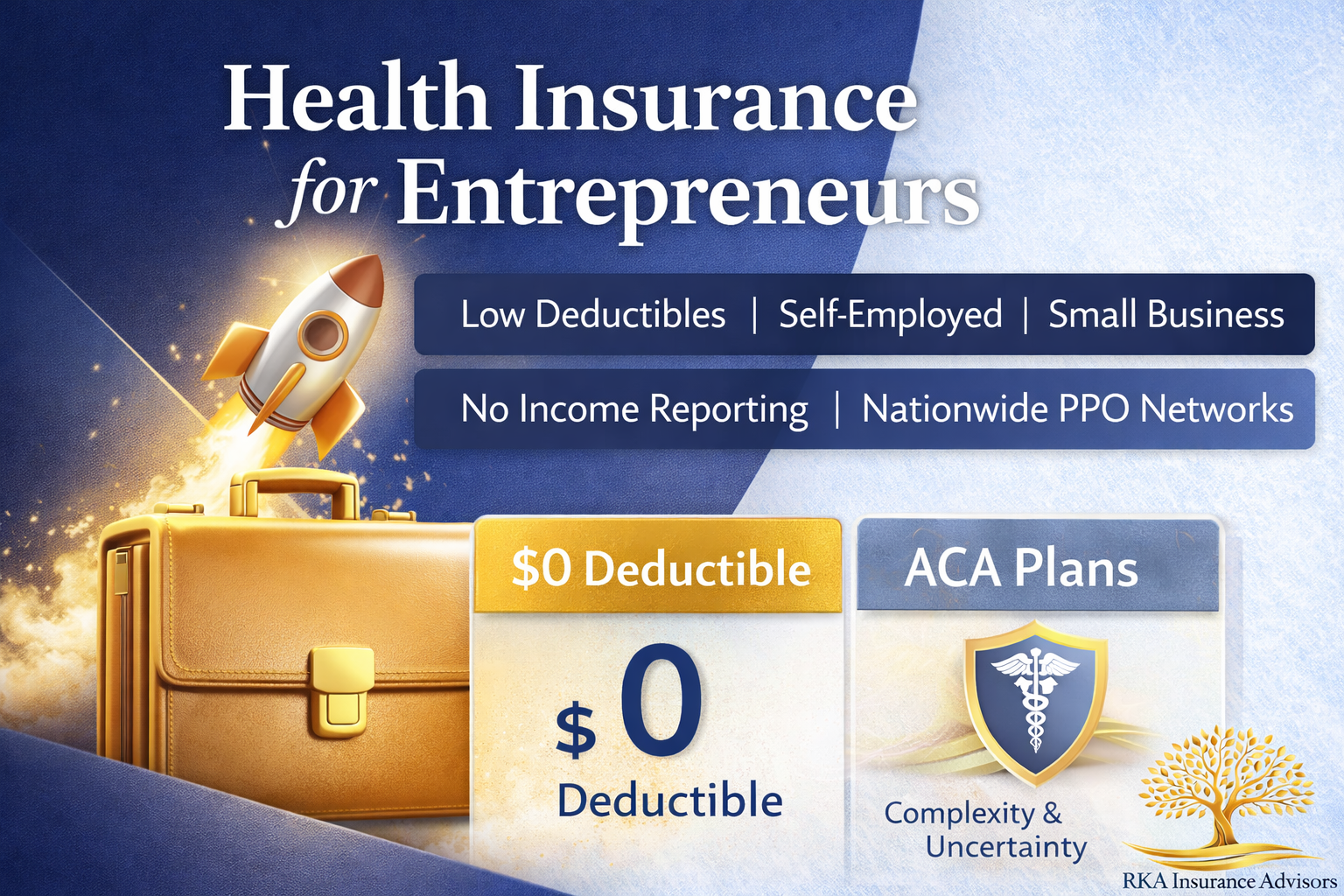
Starting a New Business? Here's Your Health Insurance Game Plan
Starting a new business with unpredictable income? Private underwritten PPOs eliminate subsidy reconciliation hassles and may offer plans with deductibles as low as $0—often beating ACA high-deductible plans with healthier risk pools and supplemental coverage.
Starting a New Business? Here's Your Health Insurance Game Plan
Fast take: Left your job to start a business? Your health insurance strategy matters as much as your business plan. With unpredictable first-year income, private underwritten PPOs eliminate subsidy reconciliation hassles and may offer plans with deductibles as low as $0—often beating high-deductible ACA plans with better networks and lower total costs.
Just went full-time on your business?
We'll compare COBRA, ACA, and private PPO options—and verify your doctors stay covered while you build.
Get Free Quotes Book a CallYour coverage options when starting a business
COBRA (Bridge Option)
✓ Keep your old employer plan
✓ Same doctors and networks
✗ Usually most expensive
✗ Time-limited (18 months max)
ACA Marketplace
✓ May be cheapest with subsidies
✓ Loss of job = Special Enrollment
✗ Often HMO/EPO networks
✗ Income reconciliation at tax time
✗ High deductibles ($7,000-$9,000+)
Private Underwritten PPO
✓ May qualify for deductibles as low as $0
✓ Nationwide PPO access
✓ Year-round enrollment
✓ No income reporting
✓ Healthier risk pools
Why unpredictable income is a nightmare with ACA subsidies
The income estimation trap
When you enroll in ACA, you estimate your 2026 income in advance. First-year business? You're guessing.
✗ Estimate too low → subsidy payback at tax time
✗ Estimate too high → overpay premiums all year
✗ Business takes off mid-year? You owe thousands back
Private PPO eliminates the guessing game
Your premium is based on age, ZIP, and plan—not income.
✓ Make $50k or $500k? Premium stays the same
✓ No Form 8962 reconciliation at tax time
✓ Budget with confidence from day one
Why private underwritten PPOs beat high-deductible ACA plans
Many entrepreneurs think high-deductible Marketplace plans are their only affordable option. That's rarely true for healthy business owners.
ACA high-deductible plans
✗ $7,000-$9,000+ deductibles common
✗ You pay 100% until deductible is met
✗ Risk pool includes all applicants (healthy + unhealthy)
✗ Often HMO/EPO with referral requirements
✗ Premium jumps if income rises
Private underwritten PPOs
✓ May qualify for deductibles as low as $0
✓ Copays often start immediately (office visits, Rx)
✓ Risk pool = healthy small business owners/employees
✓ Nationwide PPO networks, no referrals
✓ Premium never changes with income
The risk pool advantage: Why private plans cost less for healthy entrepreneurs
ACA Marketplace risk pools
Guaranteed issue = everyone accepted regardless of health
Risk pool includes:
• Healthy applicants
• Chronic conditions
• High-cost ongoing treatments
Result: Higher premiums spread across everyone, including you
Private underwritten risk pools
Medical underwriting = healthier risk pool through association memberships
Risk pool includes:
• Healthy business owners
• Small business employees
• Self-employed professionals
Result: Lower premiums for healthy applicants, better benefits, lower deductibles
Supplemental coverage: Offsetting out-of-pocket costs
Even with low-deductible private PPOs, you can further reduce financial risk with supplemental coverage:
Hospital indemnity insurance
Pays cash benefit per day of hospitalization
✓ Use cash for deductibles, copays, or lost income
✓ Low monthly cost ($30-$80/month typical)
Accident insurance
Covers ER visits, urgent care, broken bones, imaging
✓ Pays lump sum or per-service benefits
✓ Complements your major medical plan
Critical illness insurance
Lump-sum payment if diagnosed with covered condition (heart attack, stroke, cancer)
✓ Use for medical bills, travel, mortgage—anything
✓ Peace of mind for catastrophic events
Strategy: Layer your protection
Private PPO with low deductible + hospital indemnity ($500/day) = near-zero financial risk
Total monthly cost often less than ACA high-deductible plan alone
Why entrepreneurs choose private PPO plans
No income reconciliation headaches
Your premium doesn't change when your business revenue fluctuates. No Form 8962, no tax-time surprises, no subsidy payback.
Travel-friendly nationwide networks
Client meetings in Austin? Conference in Denver? PPO access means you're covered wherever business takes you—no network restrictions.
Direct specialist access
No primary care referrals. No waiting weeks for authorization. See specialists when you need them without bureaucratic delays.
Lower total annual costs
Low-deductible PPO often costs less annually than $8,000 deductible ACA plan when you factor in total out-of-pocket exposure.
Common mistakes new business owners make
❌ Staying on COBRA too long
COBRA is expensive and time-limited. It's a bridge, not a long-term solution. Compare alternatives within 60 days.
❌ Underestimating income for subsidies
Business takes off? You'll owe subsidy money back at tax time. Estimate conservatively or skip subsidies entirely with private PPO.
❌ Accepting high deductibles as inevitable
ACA high-deductible plans aren't your only option. Private underwritten PPOs may offer plans with deductibles as low as $0 for healthy applicants.
❌ Not considering supplemental coverage
Hospital indemnity and accident insurance can eliminate remaining out-of-pocket exposure for less than $100/month.
Decision guide: Which option fits your business?
Choose ACA Marketplace if...
✓ Your first-year income will be very low (under $35k individual)
✓ You qualify for strong subsidies and cost-sharing reductions
✓ Your income is stable and predictable
✓ You're comfortable with high deductibles and HMO networks
✓ You don't mind annual tax reconciliation
Choose Private Underwritten PPO if...
✓ Your income is variable or growing (startup revenue unpredictable)
✓ You're healthy and pass medical underwriting
✓ You want lower deductibles and immediate copays
✓ You travel frequently for business
✓ You prefer nationwide PPO access with no referrals
✓ You want to avoid subsidy reconciliation at tax time
Your launch timeline: Health insurance edition
Before you leave your job
✓ Document your last day of employer coverage
✓ Get COBRA election notice
✓ List your current doctors and prescriptions
✓ Estimate your Year 1 business income range (low and high scenarios)
First 60 days after leaving
✓ Compare COBRA vs ACA vs private PPO costs and deductibles
✓ Verify provider networks for all options
✓ Get quotes for supplemental coverage (hospital indemnity, accident)
✓ Enroll in your long-term solution before Special Enrollment window closes
First year in business
✓ Track actual income monthly (if on ACA, update estimates)
✓ Keep records for self-employed health insurance tax deduction
✓ Set aside emergency fund for deductibles and out-of-pocket costs
✓ Review supplemental coverage needs as business stabilizes
Annual review
✓ Reassess coverage during Open Enrollment (or anytime with private PPO)
✓ Compare costs as your income stabilizes
✓ Verify doctors are still in-network
✓ Adjust deductible level based on actual business cash flow
How RKA helps entrepreneurs
Fast transition planning
We map your options before your last day of work—COBRA bridge strategies, Special Enrollment timing, and private PPO alternatives with accurate underwriting pre-screening.
Network verification
We confirm your doctors and hospitals are in-network across all options—ACA, private PPO, and supplemental plans—before you commit.
Total cost analysis
We model multiple income scenarios and compare: premiums + deductibles + expected usage + supplemental coverage = your true annual cost.
Supplemental layering strategy
We show you how hospital indemnity, accident, and critical illness coverage can eliminate remaining out-of-pocket exposure affordably.
Launching your business? Lock your health insurance first.
We'll compare COBRA, ACA, and private underwritten PPO options—verify your doctors—and layer supplemental coverage to eliminate financial risk.
Get Free Quotes Book a CallQuick FAQs
Why is private underwritten PPO cheaper than ACA high-deductible if I'm healthy?
Risk pool matters. ACA pools include everyone regardless of health, spreading costs across healthy and unhealthy. Private underwritten plans pool healthy small business owners, employees, and self-employed professionals through association memberships, resulting in lower premiums and better benefits.
What if my business income is unpredictable?
Private PPO eliminates the guessing game. Your premium is based on age and ZIP—not income. Make $50k or $500k, your premium stays the same. No subsidy reconciliation, no Form 8962, no tax-time surprises.
How does supplemental coverage work with my major medical plan?
Supplemental policies (hospital indemnity, accident, critical illness) pay cash benefits directly to you—use the money for deductibles, copays, lost income, or anything else. They stack on top of your major medical plan to eliminate financial risk.
For education only; consult a tax professional for deduction advice. Eligibility for private underwritten plans subject to medical underwriting. Benefits vary by carrier and state. Always review official plan documents.